Upper lip
The single area booked most often, and the one most women notice first. Fine work, short sessions, and usually the quickest to show change.

Coarse hair on the chin, upper lip or jawline in women is often hormonal rather than cosmetic — PCOS is the most common cause, with thyroid disorders and some medications behind others. Laser reduces the hair that is already there over a course of sessions, but an unaddressed hormonal driver keeps converting fine hair into coarse hair behind it, which is why treating only the hair disappoints.
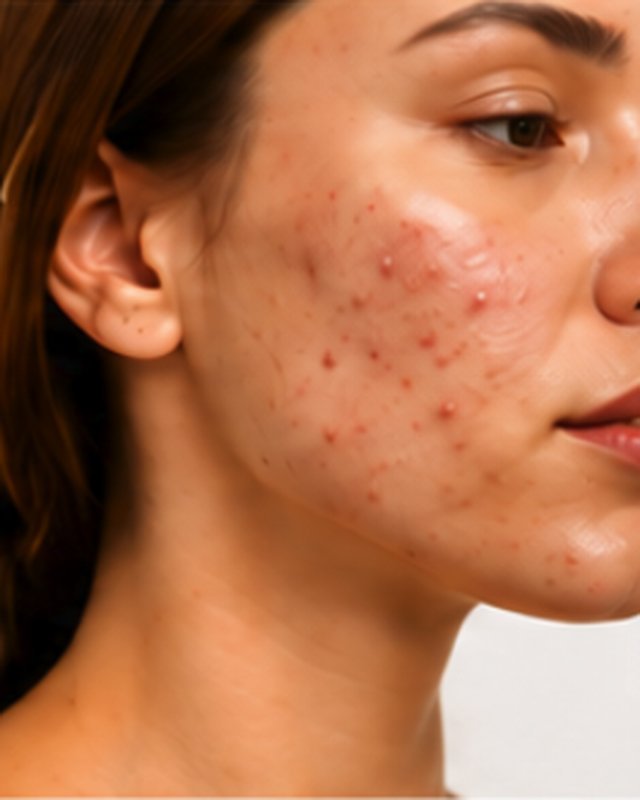
Identifying the type matters, because each is treated differently.
The single area booked most often, and the one most women notice first. Fine work, short sessions, and usually the quickest to show change.
Typically coarser and more stubborn than the upper lip, and the pattern most strongly associated with a hormonal driver. Often arrives alongside jawline acne.
Softer, lighter hair across the sides of the face. Responds less predictably than chin hair because there is less pigment for the laser to target.
Coarse hair that arrived over months rather than years, especially with irregular periods, acne or weight change, is the presentation that warrants blood work before a laser course rather than after it.
Irregular or absent periods, jawline acne, a widening parting or recent weight change alongside the hair points at a driver worth testing for. Our page on PCOS skin and hair sets out what that work-up involves. This is not a delay tactic — laser can start in parallel — but skipping it is the usual reason a course that worked stops holding.
Facial hair commonly needs eight to twelve sessions, spaced a little longer apart than body areas, plus periodic maintenance. It is finer and more hormone-responsive than leg or underarm hair, which makes it the slowest area on the body to clear. Anyone quoting you three sessions for a chin has not examined it.
Most Indian patients are Fitzpatrick IV or V. A longer wavelength and conservative starting fluence are what keep facial treatment safe in deeper skin, and a patch test comes before the first full session every time. The face is the worst possible place to discover a setting was too aggressive.
Threading, waxing and plucking pull out the follicle the laser needs to find, so an area worked on a week before a session largely wastes that session. Shaving or trimming is fine and does not coarsen regrowth, whatever the common wisdom says.
This page is about the cause. For what treating the lip, chin and jawline costs, and how many sessions the face needs, see Upper lip laser hair removal.
No, and the accurate term is long-term reduction. Density and coarseness fall substantially across a course, but follicles can be stimulated again — particularly where a hormone is driving them — so most women need occasional maintenance sessions afterwards. Any clinic promising permanence on facial hair is overselling a genuine but partial result.
Facial hair commonly needs eight to twelve sessions, more than the six to eight typical of body areas, because it is finer and responds to hormones. The upper lip often clears faster than the chin. Your range is set after your hair and skin are examined, not from a price list.
Published per-session prices start from ₹800 for the upper lip and ₹3,500 for a full face, and sessions are paid one at a time rather than as a package signed on day one. Because facial hair usually needs more sessions than body areas, the course total matters more than the session price.
If your periods are irregular, the hair appeared quickly, or it comes with jawline acne or thinning at the parting, then yes — and treatment does not have to wait for the results. Testing alongside the laser course is what stops the hair returning once the course ends.
Poorly, and that is said before you pay rather than after the third session. Laser targets pigment in the follicle, so hair with little or none carries almost no target. If most of your facial hair is grey or very light, we will tell you laser is the wrong tool for it.
No. That belief comes from shaving, where a blunt cut end feels coarser without the hair having changed. Laser damages the follicle; hair that does return after a course typically comes back finer and lighter than it was, not thicker.
This page is educational and does not replace an in-person consultation. Medical disclaimer · How we write our content