
PRP Hair Treatment
Platelet-rich plasma from your own blood, used alongside medical treatment for thinning hair.
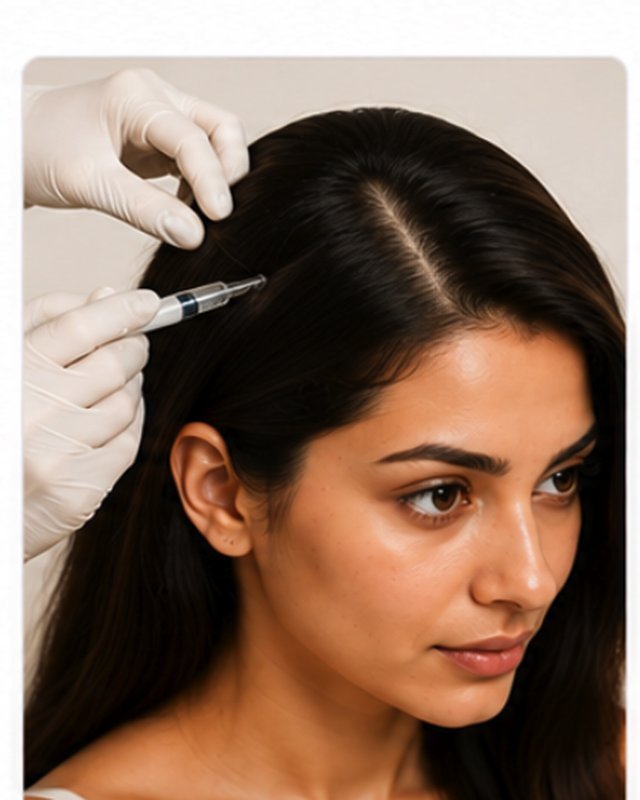
A small blood sample is spun to concentrate the platelets, and that plasma is injected across the thinning areas of the scalp. Evidence suggests it helps selected patients — usually early to moderate pattern loss, where follicles are miniaturised rather than long gone — and it works best as part of a plan that also treats the cause. It is not a standalone answer, and response varies between people.
What you’ll notice
How the visit works
Consult
A relaxed, complimentary conversation and skin assessment with a physician.
Plan
A transparent, personalised plan with clear pricing and realistic outcomes.
Treat
Your treatment in a calm, medical-grade suite with comfort at its core.
Glow
Aftercare and follow-ups to protect and extend your results.
How it works
- A small blood sample is drawn and spun to separate and concentrate the platelets
- That plasma is injected across the thinning areas at a set depth and spacing
- The growth factors released are thought to support miniaturised follicles and prolong the growth phase
- It supports follicles that still exist — it does not create new ones
Sessions & downtime
Commonly four to six sessions about four weeks apart, then maintenance every four to six months where the response justifies it. Whether to continue is decided on photographs at review rather than booked upfront.
Scalp tenderness for a day or so and occasionally mild forehead swelling overnight. Most people work the same day and wash their hair normally the next morning.
Aftercare
- Leave the scalp alone for the rest of the day; wash normally from the next morning
- No colouring, chemical treatment or vigorous scalp massage for about 48 hours
- Paracetamol is fine for tenderness; avoid anti-inflammatories on the day unless told otherwise
- Carry on with the medical treatment — PRP is added to it, not used instead of it
When we would not treat
- Bleeding disorders, or blood-thinning treatment without medical clearance
- Active scalp infection or inflamed skin at the injection sites
- Low platelets, significant anaemia or an untreated deficiency — corrected first
- Long-standing bald areas where no follicles remain
Concerns this treats
Frequently asked
Does PRP actually work for hair loss?
The evidence supports a benefit in selected patients, mostly early to moderate pattern thinning, when it is used alongside medical treatment. It is not a cure and not a substitute for diagnosis, and anyone promising a set result from it is going beyond the evidence.
How many sessions will I need?
Usually four to six about a month apart, then maintenance depending on response. We review photographs before recommending more, rather than selling a fixed package at the first visit.
Is it painful?
The injections are felt, particularly along the front hairline. Numbing cream and cooling make it manageable for most people, and the session itself is short.
What does PRP cost?
PRP starts at ₹3,000 a session here. What a course costs depends on how many sessions your assessment indicates, so you get the plan and the figure in writing after the work-up rather than a package price over the phone.
Can I have PRP while I am on medical treatment?
Yes, and that is usually the point. PRP is added to medical therapy rather than replacing it, and the two are generally used together.
How soon will I notice a difference?
Reduced shedding is often the first change, within a couple of months. Any visible density change is judged at four to six months on photographs, because hair does not move faster than that.
Is PRP the same as GFC?
They start from the same place — your own blood — but GFC is processed further to concentrate growth factors. PRP has the larger evidence base; GFC is usually more comfortable. Which suits you is a clinical judgement, not a price decision.
This page is educational and does not replace an in-person consultation. Medical disclaimer
You may also consider
Botox & Anti-Wrinkle
Soften frown lines, crow’s feet and forehead creases with a light, natural touch.
Learn more →Dermal Fillers
Restore lost volume, refine contours and rebalance features with hyaluronic acid.
Learn more →Laser Hair Removal
Permanent reduction with technology calibrated for Indian skin tones.
Learn more →