Laser Skin Resurfacing
Staged resurfacing for acne scarring, rough texture and uneven tone in deeper skin tones.
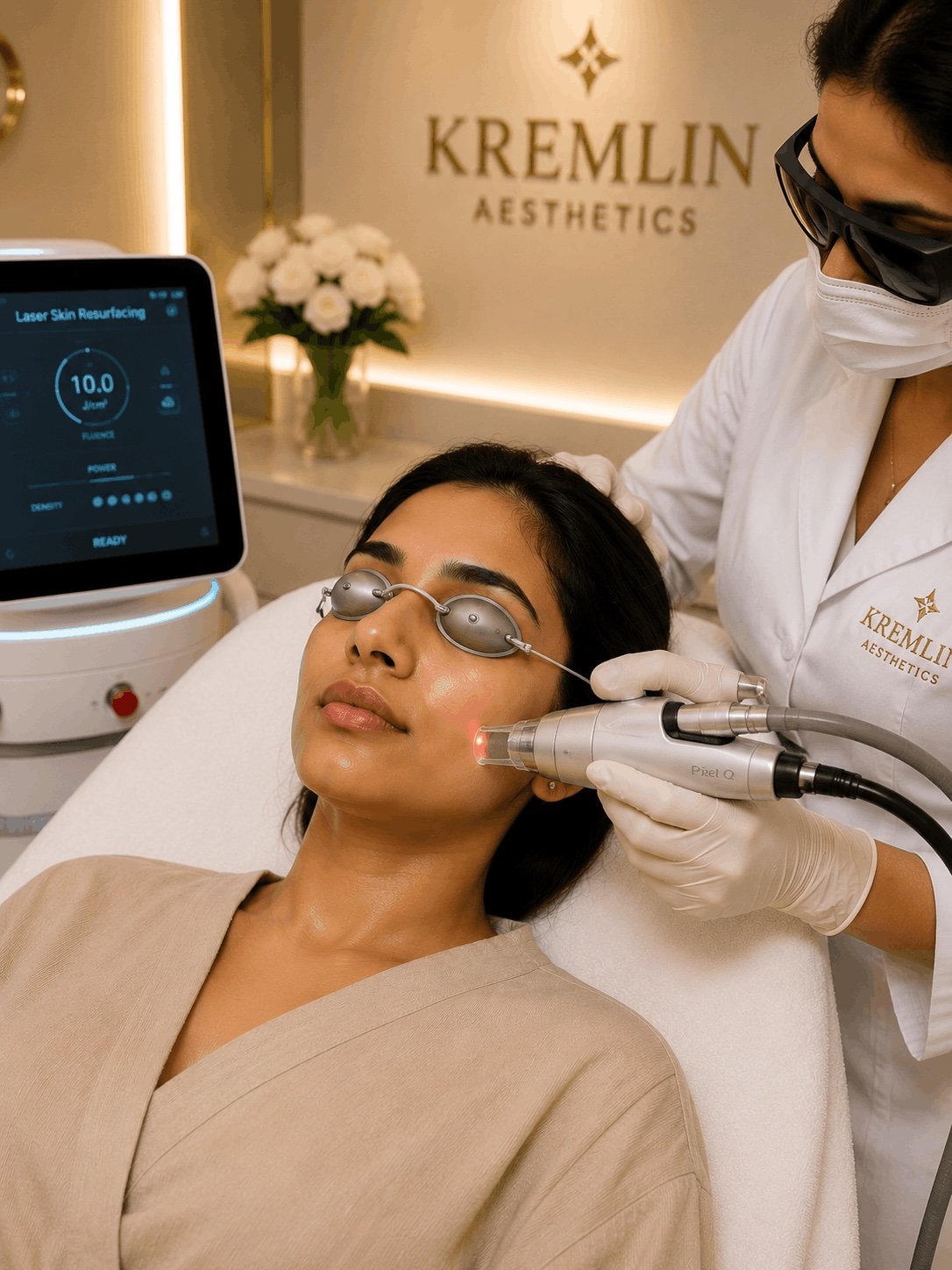
Fractional laser treats microscopic columns of skin and leaves the tissue between them intact, so the area repairs and lays down new collagen over the following weeks. In Fitzpatrick IV–V skin it is staged across several conservative sessions rather than one aggressive pass, because post-inflammatory pigmentation — not the resurfacing itself — is the risk that actually matters here.
What you’ll notice
How the visit works
Consult
A relaxed, complimentary conversation and skin assessment with a physician.
Plan
A transparent, personalised plan with clear pricing and realistic outcomes.
Treat
Your treatment in a calm, medical-grade suite with comfort at its core.
Glow
Aftercare and follow-ups to protect and extend your results.
How it works
- The beam is split into microscopic treatment columns, sparing the skin in between
- That untreated tissue speeds healing and limits the risk of pigment change
- Repair lays down new collagen over weeks to months, which is what softens scars and texture
- Depth and density are set for the scar type and the skin tone, not to one fixed protocol
Sessions & downtime
Typically three to six sessions four to six weeks apart, set by what is being treated and how the skin responds. Deep or long-standing acne scarring generally needs the upper end, and improvement continues for months after the last session.
Redness and a sandpaper texture for three to five days, sometimes with light flaking, and a sunburnt sensation on the day. Make-up usually goes back on after a few days. Book it for a quiet week rather than the week of an event.
Is this suitable for Indian skin?
This is the question that matters most in Fitzpatrick IV–V skin, and the honest answer is that resurfacing is safe here when it is done conservatively and risky when it is not. Melanin-rich skin answers heat and injury with pigment, so the thing to manage is post-inflammatory hyperpigmentation rather than the laser itself. That means priming the skin for a few weeks beforehand, patch testing, lower density and energy, adequate spacing between sessions, and strict sun protection afterwards. A single dramatic session sold as a transformation carries materially more pigmentation risk in Indian skin than a staged course, and takes far longer to recover from when it goes wrong.
Aftercare
- Strict sun avoidance and daily broad-spectrum sunscreen for several weeks — this protects the result
- Bland moisturiser and gentle cleansing while the skin repairs
- No retinoids, acids or scrubs until you are told they are safe again
- Let any flaking come away on its own; picking is how you end up with a mark that lasts
When we would not treat
- Active acne, cold sores or any infection in the treatment area
- Recent isotretinoin use — a gap is generally required before resurfacing
- A tendency to keloid or hypertrophic scarring, assessed individually
- Recent sun exposure or an active tan; sessions are rescheduled rather than risked
- Pregnancy, where elective resurfacing is usually deferred
Concerns this treats
Frequently asked
Will laser resurfacing remove my acne scars completely?
No honest treatment erases scarring. A realistic course produces a marked reduction in depth and visibility — patients often describe scars catching the light less — and how much depends on the scar type, its depth and how long it has been there.
Is it safe on brown and dark skin?
Yes, with settings chosen for the skin tone and a staged approach. The risk to manage is temporary post-inflammatory pigmentation, which conservative density, priming and strict sun protection address. It is the protocol that makes it safe, not the name on the machine.
How much downtime should I plan for?
Three to five days of redness and roughness for most people, occasionally a little longer. Plan it for a quiet week rather than before a wedding or a presentation.
How many sessions will I need?
Usually three to six, four to six weeks apart. After the first session you should be told how your skin responded and whether that estimate still stands.
When will I see the difference?
Texture change becomes noticeable a few weeks in and keeps improving for months after the final session, because collagen remodelling is slow. Judging it a fortnight after a session is too early.
Is it painful?
Numbing cream is applied beforehand, and the sensation is usually described as hot prickling, with the skin feeling sunburnt for a few hours afterwards. Some areas, the upper lip especially, are felt more.
Can it be combined with other treatments?
Often, but sequenced rather than stacked. Scar plans frequently pair resurfacing with microneedling or pigment-directed care across a timeline, with any active acne treated first.
This page is educational and does not replace an in-person consultation. Medical disclaimer
You may also consider
Botox & Anti-Wrinkle
Soften frown lines, crow’s feet and forehead creases with a light, natural touch.
Learn more →Dermal Fillers
Restore lost volume, refine contours and rebalance features with hyaluronic acid.
Learn more →Laser Hair Removal
Permanent reduction with technology calibrated for Indian skin tones.
Learn more →