Acne Treatment
Bring active breakouts under control, with a plan built for the type of acne you have.
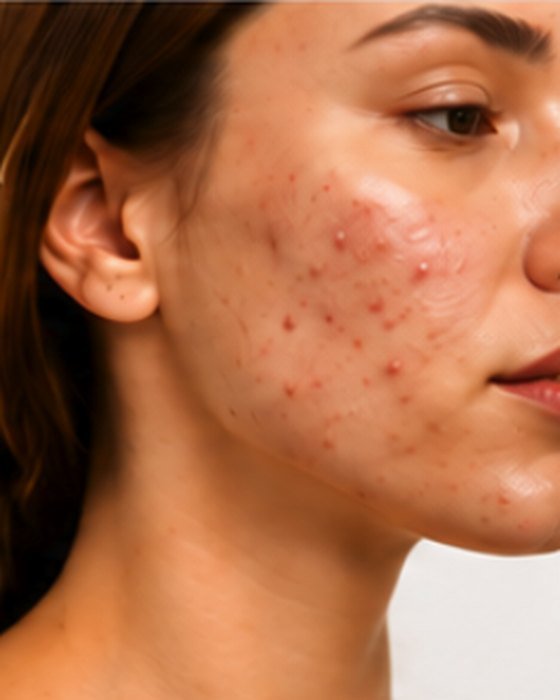
Comedonal, inflammatory and hormonal acne respond to different things, so the plan starts with working out which you have and whether anything — PCOS, a medication, a product — is driving it. Treatment combines prescription topicals and, where indicated, oral medication with in-clinic work such as peels and extractions. Acne is controlled rather than cured, and the aim is steady control with as little marking left behind as possible.
What you’ll notice
How the visit works
Consult
A relaxed, complimentary conversation and skin assessment with a physician.
Plan
A transparent, personalised plan with clear pricing and realistic outcomes.
Treat
Your treatment in a calm, medical-grade suite with comfort at its core.
Glow
Aftercare and follow-ups to protect and extend your results.
How it works
- Assessment establishes the type of acne and looks for drivers such as PCOS, medication or products
- Topical treatment normalises the follicle lining and reduces the bacteria and inflammation involved
- Oral treatment is added where acne is inflammatory, scarring or not responding
- Clinic sessions clear congestion and support the medical plan rather than replacing it
Sessions & downtime
Medical treatment is reviewed at six to eight weeks, because that is the earliest a change can honestly be judged. Where clinic sessions are included, a course of four to six every two to four weeks is typical, then maintenance.
Peels leave mild flaking for a few days. Prescription topicals commonly cause dryness and irritation in the first fortnight, and skin can look worse before it looks better.
Is this suitable for Indian skin?
In deeper skin tones the marks left after a spot clears — post-inflammatory hyperpigmentation — often distress patients more than the acne itself, and they take months to fade. That changes the plan: the priority is settling inflammation quickly and avoiding anything that adds to it, including picking, harsh scrubs and over-aggressive peeling. Daily broad-spectrum sunscreen is part of acne treatment here rather than an afterthought, because sun exposure darkens those marks and prolongs them.
Aftercare
- Introduce actives slowly and expect a fortnight of dryness before the skin adapts
- Broad-spectrum sunscreen daily — it is what limits the dark marks afterwards
- Stop picking and squeezing; that is what turns a spot into a scar
- Give any plan six to eight weeks before deciding it has not worked
When we would not treat
- Pregnancy and breastfeeding — several standard acne treatments are avoided and substituted
- Peels or resurfacing during an active inflammatory flare; medical treatment comes first
- Recent isotretinoin use before any peel or resurfacing — a gap is generally required
- Anyone wanting clear skin in a fortnight; the biology does not move that fast
Concerns this treats
Frequently asked
How long does acne treatment take to work?
Six to eight weeks is the earliest point at which a plan can be judged fairly, and inflammatory acne often takes three to four months to settle properly. Skin sometimes looks worse in the first fortnight as treatment starts.
Can acne be cured?
It is controlled rather than cured. Most acne is driven by hormones and follicle biology that change over time, so the aim is steady control now plus a maintenance routine that stops it returning.
Will treating acne prevent scarring?
Nothing removes the risk, but the strongest thing you can do about acne scars is treat active inflammatory acne early and stop picking. Scars form from inflammation left to run.
Do I need blood tests for acne?
Sometimes. Where acne appeared late, sits along the jawline, or comes with irregular cycles or excess hair growth, hormonal screening is worth doing rather than assuming.
Are facials and peels enough on their own?
For mild congestion they can help a great deal. Inflammatory or cystic acne needs medical treatment, and clinic sessions support that plan rather than substituting for it.
What does acne treatment cost?
Clinic sessions here start at ₹1,500 and scar work from ₹3,500, so what you pay depends on which of those your assessment indicates and how many sessions are needed. You get the plan and the figure before anything is booked.
Will the dark marks left by acne fade?
Usually, but slowly — post-inflammatory pigmentation commonly takes several months, and faster where the skin is protected from sun. Marks sitting level with the skin are pigment rather than scars, and behave differently.
This page is educational and does not replace an in-person consultation. Medical disclaimer
You may also consider
Botox & Anti-Wrinkle
Soften frown lines, crow’s feet and forehead creases with a light, natural touch.
Learn more →Dermal Fillers
Restore lost volume, refine contours and rebalance features with hyaluronic acid.
Learn more →Laser Hair Removal
Permanent reduction with technology calibrated for Indian skin tones.
Learn more →