
Sunscreen for Indian skin: SPF, PA+++ and what actually matters
Yes — Indian skin needs sunscreen, just for different reasons than fair skin. Melanin gives partial protection against burning but none worth having against tanning, pigmentation and melasma — which are exactly our biggest problems. A broad-spectrum SPF 30+ with PA+++, applied daily in the right quantity, outperforms any brightening product you can buy.
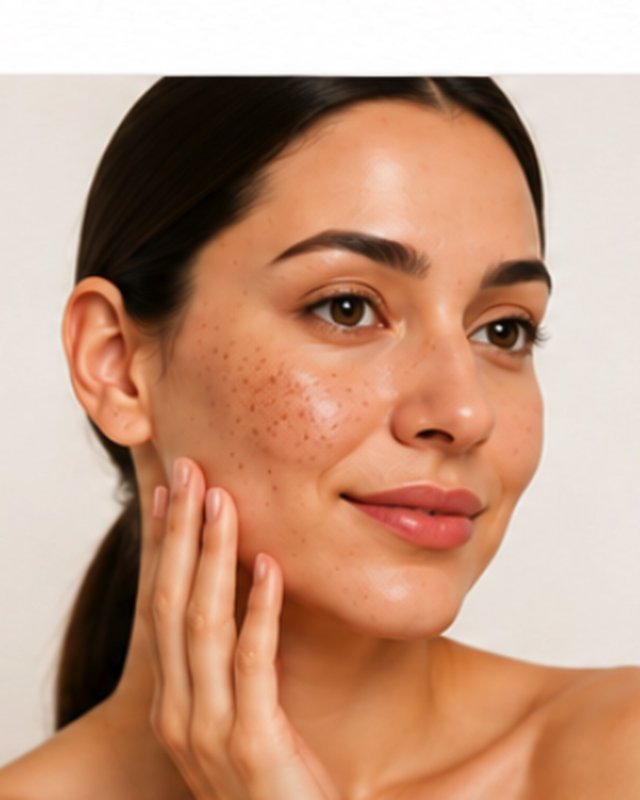
The myth: "dark skin doesn't need sunscreen"
Melanin does blunt sunburn — which is why the myth survives. What it does not stop is the UVA-driven damage that matters most to Indian skin: tanning, deepening pigmentation, melasma flares and slow photo-ageing.
Look at the pattern in our consultation room: the top complaints — tan, uneven tone, dark patches, post-acne marks — all have sun exposure as their engine. The cheapest treatment for all of them is the one applied before leaving home.
SPF and PA+++, decoded in one minute
SPF measures protection against UVB — the burning rays. PA (with its + signs) measures protection against UVA — the tanning, pigmenting, ageing rays that pass through clouds and window glass. Indian skin's problems are mostly UVA problems, so the PA rating deserves more attention than it gets.
"Broad spectrum" means both are covered. SPF 30 versus SPF 50 matters far less than the next section — how much you apply.
The real problem: quantity
Lab SPF assumes 2mg per square centimetre — for the face and neck, roughly two full finger-lengths of product. Most people apply about a quarter of that, which turns an SPF 50 into something closer to a single-digit SPF in practice.
The fix is unglamorous: apply generously, and reapply every three to four hours when outdoors. An 'inferior' sunscreen applied properly beats a premium one applied thinly, every single time.
Choosing a texture for Chennai's climate
Humidity is why most people abandon sunscreen — the wrong texture feels like a second skin. Gels, fluids and matte-finish formulations sit far better here than rich creams; oily and acne-prone skin should look for 'non-comedogenic' on the label.
The white cast on deeper skin tones is a solved problem: newer filters and tinted formulations disappear into brown skin. Tinted versions carry a bonus — the iron oxides in them block visible light, which matters specifically for melasma.
Sunscreen is the treatment, not the accessory
Every pigmentation plan we write is built on daily sunscreen — peels, lasers and prescription creams all underperform without it, because new pigment is being made faster than treatment clears the old.
It is also the difference between a treatment that holds and one that relapses: the patients whose results last are, almost without exception, the ones who kept the sunscreen habit after the sessions ended.
The mistakes that undo it
Applying it only on 'sunny days' — UVA is constant through cloud and glass. Counting the SPF 15 in makeup as protection — it is applied far too thinly to deliver it. Skipping reapplication on a two-wheeler commute — the highest-exposure minutes of a Chennai day. And stopping in the monsoon, which is exactly when hard-won pigment progress quietly reverses.
Frequently asked
Does dark or dusky skin really need sunscreen?
Yes. Melanin partially protects against burning but not against the UVA that drives tanning, melasma and pigmentation — the problems Indian skin actually struggles with. Daily broad-spectrum sunscreen is the foundation of every pigment treatment we do.
Is SPF 30 enough, or should I use SPF 50?
Either works if applied properly — quantity and reapplication matter more than the number. Two finger-lengths for the face and neck, reapplied every few hours outdoors, is the standard most people miss.
Which sunscreen suits oily skin in Chennai's humidity?
Gel, fluid or matte-finish broad-spectrum formulations marked non-comedogenic. If a sunscreen feels unbearable in humidity, change the texture rather than abandoning the habit — there is a comfortable option for every skin type now.
Do I need sunscreen indoors?
Near windows, yes — UVA passes through glass. For melasma specifically, visible light also contributes, which is where tinted sunscreens with iron oxides earn their place even indoors.