
PIH: why Indian skin darkens after pimples, burns and treatments
Post-inflammatory hyperpigmentation (PIH) is the flat dark mark left behind after any inflammation — a pimple, a burn, a waxing strip, an over-aggressive treatment. Melanin-rich Indian skin is especially prone, because our pigment cells respond to injury by overproducing. PIH does fade — over months, not weeks — and preventing the next mark matters more than scrubbing at the last one.
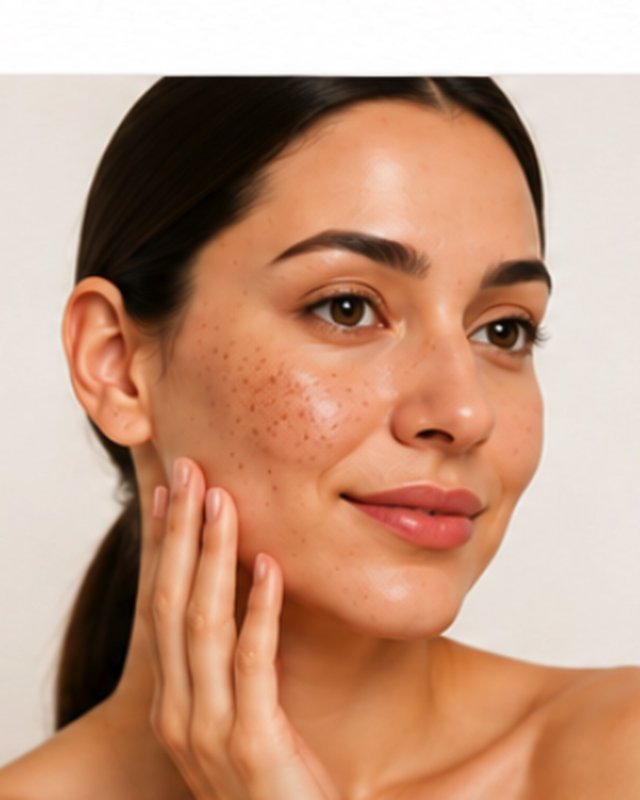
What PIH actually is
When skin is inflamed, melanocytes react by dumping extra pigment into the healing area. The inflammation resolves; the pigment stays behind as a flat brown, grey or dark mark exactly where the trouble was.
Depth decides the timeline. Pigment sitting in the epidermis fades in months; pigment that dropped deeper into the dermis can take a year or more — which is why two marks from the same face can behave completely differently.
Why Indian skin marks so easily
Fitzpatrick IV–V skin carries reactive, productive melanocytes — the same biology that protects against burning also over-responds to every insult. A pimple squeezed, a threading burn, a harsh scrub, a laser fired at the wrong settings: each can leave its signature.
This is why 'my pimple healed but left a mark' is one of the most common lines in our consultation room, and why gentle treatment settings are a safety decision, not a marketing preference.
How long marks take to fade
Honest ranges: superficial marks, three to six months with good sun protection; deeper marks, six months to two years. Anything promising mark-free skin in a week is selling either an irritant or a fantasy.
Treatment does not delete this timeline — it shortens it, sometimes substantially, and stops new pigment being added while the old clears.
What genuinely speeds clearing
Daily broad-spectrum sunscreen, because UV keeps restocking the pigment you are trying to clear. Prescribed pigment-directed topicals. Gentle, properly chosen chemical peels that lift pigmented layers without new inflammation.
And most importantly: treating the cause. If acne is still active, new marks form as fast as old ones fade — control the acne first and the canvas finally gets to clear.
What makes it worse
Picking and squeezing — the single biggest mark-maker. Scrubbing at marks, which re-inflames them darker. Lemon, toothpaste and baking-soda remedies — all irritants. Unsupervised steroid fairness creams, which thin skin and rebound darker. And sun exposure on a fresh mark, which can set it for months.
Mark or scar? They need different plans
Run a finger over it. Smooth and flat = PIH — a pigment problem with a pigment solution. A dip or bump you can feel = a true scar — a structure problem needing collagen-directed treatment like microneedling.
Most post-acne faces carry both, which is why an examination sorts them before anything is booked — treating pigment with scar tools (or scars with creams) wastes months.
Frequently asked
Do dark marks from pimples go away on their own?
Usually yes — superficial marks fade over three to six months if protected from sun and picking. Treatment shortens the wait and matters most for deeper, older marks that would otherwise linger for a year or more.
What is the fastest way to remove dark marks?
Sunscreen daily, a prescribed pigment-directed routine, and gentle peels in clinic — together. There is no honest overnight option; everything fast enough to 'work in days' works by irritating, which makes marks worse in Indian skin.
Why does every pimple leave a mark on my skin?
Deeper skin tones carry reactive pigment cells that over-respond to inflammation. It is normal biology, not bad skin — and the practical answer is treating acne early and never squeezing, because the mark forms during the inflammation.
Can laser treatment cause pigmentation?
On deeper skin with wrong settings or uncontrolled sun exposure, yes — that is PIH, and it is largely preventable: suitable wavelengths, patch testing, conservative settings and strict sun rules. It is also why device and operator choice matter more than price.