
Laser hair removal side effects: the complete, honest list
Every laser hair removal session causes redness and small raised bumps around each The same question is asked as laser hair treatment side effects, laser epilation side effects, laser waxing side effects and laser hair reduction side effects — it is one treatment and the answer below covers all of them.follicle — perifollicular oedema — which settle within hours. Temporary pigment change is the risk that matters on Indian skin. Burns, scarring and paradoxical hair growth are genuinely rare and nearly always traceable to wrong settings, a skipped patch test, or sun. Here is every effect, honestly.
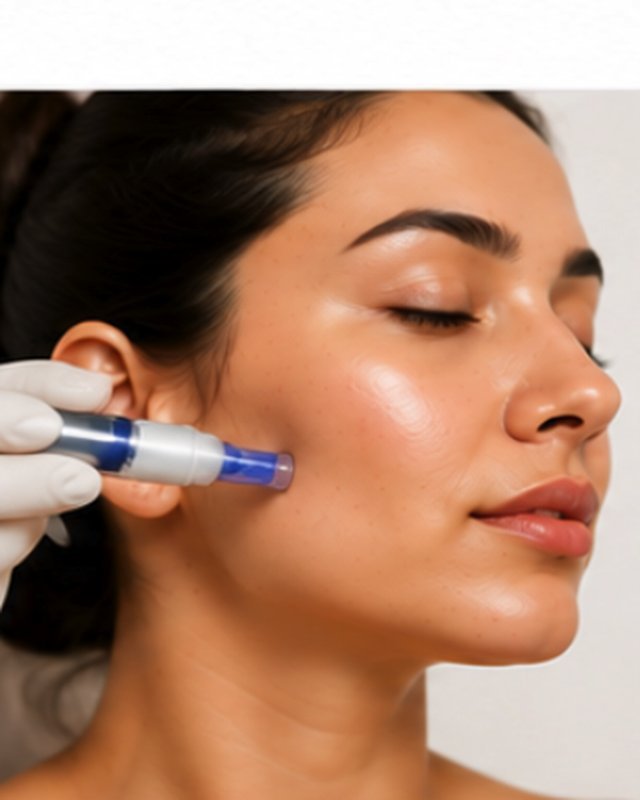
What happens after every session — and why it is a good sign
Two things happen to nearly everyone. The skin flushes pink and feels warm, like mild sun exposure. And small raised bumps rise around each treated follicle — clinically, perifollicular oedema, though most people describe them as goosebumps that will not go down.
Both usually settle within a few hours and are almost always gone within a day. What surprises people is that a practitioner actively wants to see them: that follicle-level swelling is the visible sign that energy reached the follicle rather than stopping at the skin. Its absence can be more concerning than its presence.
A cool compress and loose cotton is the whole of the management. Treated hairs then shed over one to two weeks — pushed out, not vaporised on the spot — which is regularly mistaken for regrowth and is not a side effect at all.
Temporary pigment change — the effect that matters on Indian skin
This is the one worth understanding properly, because it is the common meaningful side effect at Fitzpatrick IV–V, and because it is the one that is preventable.
Post-inflammatory hyperpigmentation is the treated area turning darker than the skin around it — patchy, sometimes in the outline of the laser handpiece. It appears in the days after a session and typically fades over weeks to months. Hypopigmentation, the area turning lighter, is less common; it is usually temporary too, though it can take longer to even out.
Both are driven by the same thing: heat reaching pigment in the skin rather than only pigment in the follicle. Aggressive settings, a wavelength suited to lighter skin, a fresh tan, or sun on the area in the days around a session. Which is why the sun rules in your aftercare are not fussiness — on deeper skin they are part of the treatment.
Burns, blistering and scarring — rare, and what actually causes them
Blistering, crusting and burns are genuinely uncommon, and they are not random. They happen when the energy delivered exceeds what that skin can safely absorb, and there is a short, specific list of ways that occurs.
A wavelength chosen for lighter skin used on Fitzpatrick IV–VI, so surface melanin absorbs energy meant for the follicle. Settings too high, or not reduced for a thinner or more sensitive area. Cooling that failed or was not used. Treating skin that is freshly tanned, or that has recently had a peel. Overlapping pulses on the same spot. And an operator who cannot read the skin's response and keeps going past the point where it changed.
Scarring almost never follows a burn that is treated promptly. It follows blisters that are picked, or an area that becomes infected and is left alone. That is precisely why the section below on when to call exists — the outcome depends far more on how quickly a problem is seen than on how alarming it looked on day one.
Paradoxical hypertrichosis: when laser makes more hair
It sounds like a contradiction, and it is a real, documented effect: in a small number of people, hair in or immediately around the treated area comes in thicker and darker rather than finer. It is called paradoxical hypertrichosis, and it is the most under-disclosed effect in this industry.
It is uncommon, and it is not evenly distributed. It appears mostly on the face and neck — jawline, upper lip, sides of the face — more often in deeper skin tones, and disproportionately in people whose hair growth already has a hormonal driver such as PCOS. The leading explanation is that energy too low to destroy a follicle can instead stimulate it, which is why it is typically described at the under-treated margins of an area rather than its centre.
It is manageable. The response is to reassess the settings, extend treatment so there is no under-dosed border, and look properly at whether a hormone is driving the growth in the first place. It is not a reason to avoid laser. It is a reason to have the conversation before you start, and to raise it early if you notice it.
The smaller effects nobody puts in the brochure
Folliculitis — small pimple-like bumps a day or two later — when heat, sweat and friction meet freshly treated follicles. It is usually self-limiting, and the 48-hour pause on gym, sauna and steam exists to prevent it.
Cold sore reactivation, if you are prone to them and the upper lip is treated: the heat can trigger an outbreak. Tell us beforehand and it can be pre-empted rather than dealt with afterwards. Bruising, which is uncommon and settles on its own. Temporary tingling or numbness in a treated area, which passes.
Then two absolutes that are less side effects than rules. The laser is never fired over a tattoo — ink absorbs the energy far more efficiently than a follicle does, and blisters. Moles are shielded rather than treated. Eye protection is worn by everyone in the room for every pulse, and hair inside the bony rim of the eye socket is not treated at all, which matters if anyone has offered to laser between your brows.
Why a patch test exists, and what it is actually testing
A patch test is a small area treated at the settings proposed for you, then left alone for a few days so your skin can answer a question no chart can: how does this skin, right now, respond to this energy?
Fitzpatrick skin typing is an estimate. Two people classed as the same type can tolerate noticeably different settings, and the things that move the answer — recent sun, a new medication, how reactive your skin has been lately — do not show up in a photograph. The test converts a guess into an observation.
Its real value is one of scale. If the settings are wrong, that shows up on a two-centimetre patch instead of a whole back, a face or a pair of legs. A clinic offering to skip the patch test so you can start today is offering to move the risk from a small area to a large one.
Who should not have laser hair removal
Deferred rather than refused: pregnancy — not because harm has been demonstrated, but because it has not been studied and certainty is not available, so treatment waits. An active infection, cold sore, rash or broken skin in the area waits until it has healed. A fresh tan waits.
Needs a proper conversation before anything is booked: recent isotretinoin, which needs a gap; a strong keloid or hypertrophic scarring history; photosensitising medication, including some antibiotics and acne treatments; a photosensitive condition such as lupus; and vitiligo or anything else that flares where skin is injured. Any mole or lesion in the area that has changed needs assessing on its own terms before energy is pointed at it.
And a group for whom laser is perfectly safe but close to pointless: very fine, light, red, grey or white hair carries too little pigment for the laser to target. The honest response is to say so at the consultation rather than sell a course that cannot work.
When to call the clinic
Call rather than waiting for your next appointment if you see blistering or crusting, redness that is spreading or worsening after 48 hours instead of settling, increasing pain, pus, or a patch clearly darker or lighter than the skin around it. The same goes for a cold sore starting after a lip session, or a fever.
The distinction that matters is direction, not intensity. A red, swollen, slightly tender area improving hour by hour on the day of treatment is the normal response. Anything getting worse on day two or three is not, however mild it looks.
Photograph it in daylight and send the photo. Nearly everything on that list is straightforward when it is seen early, and the cost of calling about something that turns out to be completely normal is nothing at all.
Frequently asked
Are there any side effects from laser hair removal?
Yes, and every session has some. Redness and small raised bumps around the follicles are universal and settle within hours. Temporary pigment change is the meaningful risk on deeper skin. Burns, scarring and paradoxical hair growth are rare and almost always traceable to wrong settings, a skipped patch test or sun exposure.
How long do laser hair removal side effects last?
The normal ones — redness, warmth and follicular swelling — last hours and are usually gone within a day. Temporary pigment change is the slow one, typically fading over weeks to months. Anything still worsening on day two or three is not a normal side effect and should be seen.
What are the side effects of laser hair removal on dark skin?
The same as on any skin, with one weighted differently: post-inflammatory hyperpigmentation is more likely at Fitzpatrick IV–VI because there is more melanin in the surrounding skin to absorb heat. It is usually temporary, and it is largely prevented by a suitable wavelength, conservative settings, a patch test and strict sun discipline.
Does "laser waxing" have different side effects?
"Laser waxing" mixes up two opposite things. Waxing pulls hair out by the root; laser — properly, laser epilation — heats the follicle and leaves the hair in place to shed. The side effects are the laser ones described here, and you should not wax between laser sessions, because waxing removes the target the next session needs.
Can laser hair removal cause permanent damage?
Lasting damage is rare. Scarring and long-lasting pigment change are the two possibilities, and both follow the same path — a burn or blister that was picked, infected or left unseen. Seen early, almost all of it resolves, which is why calling the clinic about something that turns out to be nothing is always the right call.