
Dark neck and underarms: what actually causes them
A dark neck or dark underarms is almost never a hygiene problem — and scrubbing harder reliably makes it worse. The common causes are friction and irritation, pigmentation left by shaving and hair-removal creams, and acanthosis nigricans — a velvety darkening linked to insulin resistance that deserves a medical check, not a fairness cream.
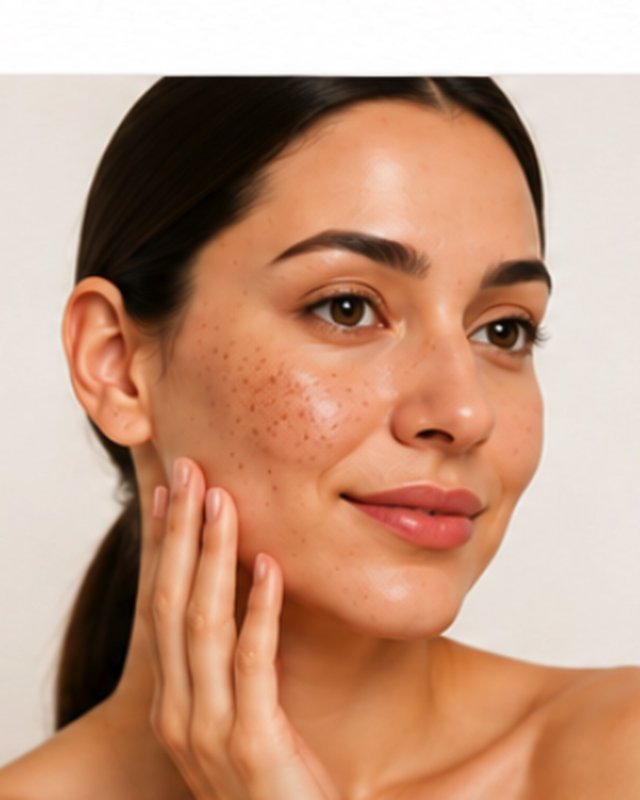
It's not dirt — so stop scrubbing
The darkening sits inside the skin as pigment, not on top of it as grime. Scrubbing, loofahs and 'detan' rubs inflame the area, and inflamed skin in someone with a deeper skin tone responds by making more pigment — the exact opposite of the goal.
If years of scrubbing haven't fixed it, that is the evidence: the cause was never on the surface.
Acanthosis nigricans: when the neck is telling you something
A velvety, slightly thickened band of darkening around the neck folds, underarms or knuckles is often acanthosis nigricans. It is strongly associated with insulin resistance, PCOS and weight gain — the skin is flagging something metabolic.
This is why the right first step is a diagnosis, not a lightening cream: treat the insulin resistance and the skin change improves with it. We screen for it, and where weight is part of the driver, a physician-led weight plan does more for the neck than any topical alone.
Friction, shaving and hair-removal creams
Underarms take repeated trauma: shaving against dry skin, depilatory creams that sit a minute too long, waxing pulls, tight sleeves, and fragrance-heavy deodorants on freshly shaved skin. Each small irritation leaves a little post-inflammatory pigment, and years of it compound.
Breaking the cycle matters more than any brightening product — which is why switching to laser hair removal often does more for underarm tone than treatment aimed at the pigment itself: remove the repeated trauma and the skin finally gets to settle.
What genuinely helps
First, the cause is identified — metabolic screening if acanthosis is suspected, an irritant audit otherwise. Then: gentler mechanics (no scrubbing, no depilatories), laser hair removal to end the shave-irritate cycle, and pigment-directed care chosen for body-fold skin, which is thinner and easier to irritate than the face.
For the neck, daily sunscreen matters more than most people expect — it is sun-exposed in every commute and rarely protected.
What to avoid
Steroid-containing fairness creams sold over the counter — they thin the skin and rebound darker. Lemon, baking soda and toothpaste home remedies — all irritants that commonly deepen the pigmentation. And any product promising to 'whiten' a body fold in a week: the biology does not work at that speed.
Frequently asked
Can dark underarms be whitened permanently?
No treatment permanently changes skin colour, and body folds are naturally a shade deeper. What is achievable is meaningful, lasting improvement by removing the cause — usually friction or shaving trauma — and treating the accumulated pigment gently.
Is a dark neck a sign of diabetes?
A velvety dark neck band (acanthosis nigricans) is associated with insulin resistance, which precedes type 2 diabetes. It is worth a simple screening — not a reason to panic, but not something to scrub at either.
Does shaving cause dark underarms?
The irritation from repeated shaving and depilatory creams commonly does. Each episode leaves a little post-inflammatory pigment. Laser hair removal breaks that cycle, which is why underarm tone often improves once shaving stops.
Do lemon or baking soda remedies work?
No — both are irritants, and irritation is precisely what deepens pigmentation in Indian skin. The most common thing we see after DIY remedies is a darker, more sensitive patch than before.