
7 Botox myths Indian patients still believe
Botox carries more myths than almost anything we offer. The short truths: done well, it relaxes specific overactive muscles rather than freezing the face; it is among the most-studied molecules in medicine; stopping simply returns you to baseline; and most horror stories trace to dose, placement or unqualified injectors — not to the treatment itself.
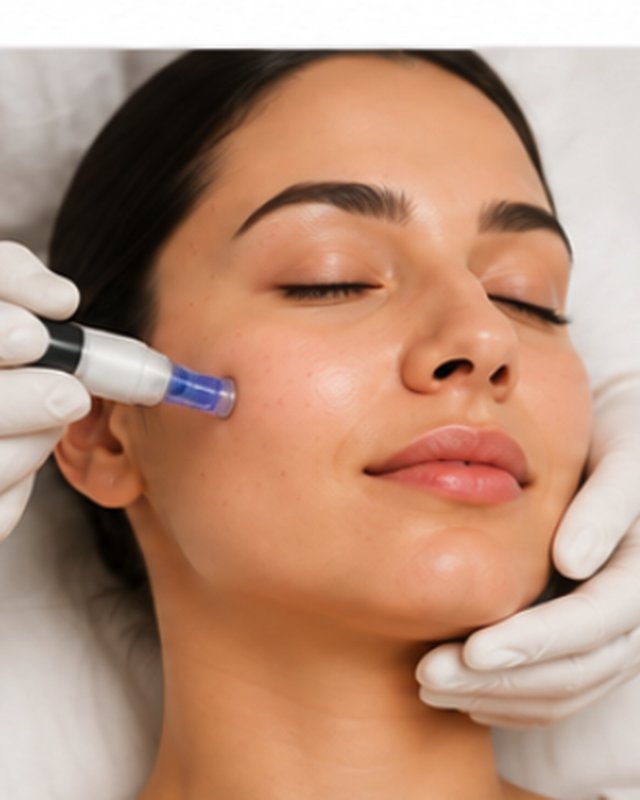
Myth 1: "It freezes your face"
The frozen look is a dosing and placement choice, not a property of the medicine. Conservative dosing in the right muscles softens lines while expressions stay — the goal is looking rested, not surprised.
The faces that made this myth famous were over-treated by choice or by inexperience. A physician who starts low and reviews at two weeks is how the natural result happens.
Myth 2: "It's dangerous"
Botulinum toxin has decades of medical use behind it — including in children for muscle conditions, at doses far beyond cosmetic ones. Aesthetic doses are tiny and act locally at the injected muscle.
The real side effects are honest but modest: temporary bruising, a heavy-brow feeling, and — with poor placement — a temporary lid droop that wears off. All technique-dependent, which is the actual safety lesson: choose the injector, not the brand.
Myth 3: "Once you start, you can't stop"
The effect fades over three to four months, and stopping simply returns your face to its baseline ageing path — not worse than if you had never started. Nothing rebounds, nothing sags extra.
If anything, years of softened frowning leave those lines shallower than they would have been. Continuing is a preference, not a trap.
Myth 4: "It's for women, and only after 50"
Men are a growing share of our injectable patients — the frown line between the brows bothers them most. And the common starting window is the 30s and 40s, when expression lines begin printing at rest.
Used early and lightly, it is prevention: lines that are never allowed to set never need correcting.
Myth 5: "Botox and fillers are the same thing"
Different tools for different problems. Botox relaxes the muscle movement that creases skin — frown lines, forehead lines, crow's feet. Fillers restore volume where it has hollowed — cheeks, lips, under-eyes.
Many faces benefit from one, not the other; some from both. The assessment decides — and our comparison guide covers this choice in depth.
Myths 6 & 7: "Anyone can inject it" and "results are instant and permanent"
Injecting is medicine: facial anatomy, dosing judgement, complication management. Parlour and home-visit Botox is where the disaster stories come from — a physician-run clinic is not a luxury preference, it is the safety mechanism.
And the timeline: nothing much on day one, visible softening from day three to seven, full effect by two weeks, gradually fading over three to four months. Anyone promising instant or permanent has told you what their advice is worth.
Frequently asked
Is Botox safe?
In physician hands at cosmetic doses, yes — it is one of the most studied treatments in aesthetic medicine. The realistic side effects are temporary and technique-related: bruising, heaviness, rarely a short-lived lid droop. Injector choice is the safety decision.
How long does Botox last?
Typically three to four months, fading gradually as muscle movement returns. Most patients settle into two to three sessions a year once they know their pattern.
Will my face look fake or frozen?
Not with conservative dosing placed correctly — the goal is a rested version of your own face, with expressions intact. Over-frozen results come from over-treatment, which is avoidable by design.
What is the right age to start?
There isn't one number — it is about when expression lines start staying at rest, commonly the 30s onward. Starting earlier with light doses prevents lines from setting; starting later softens what has already printed.