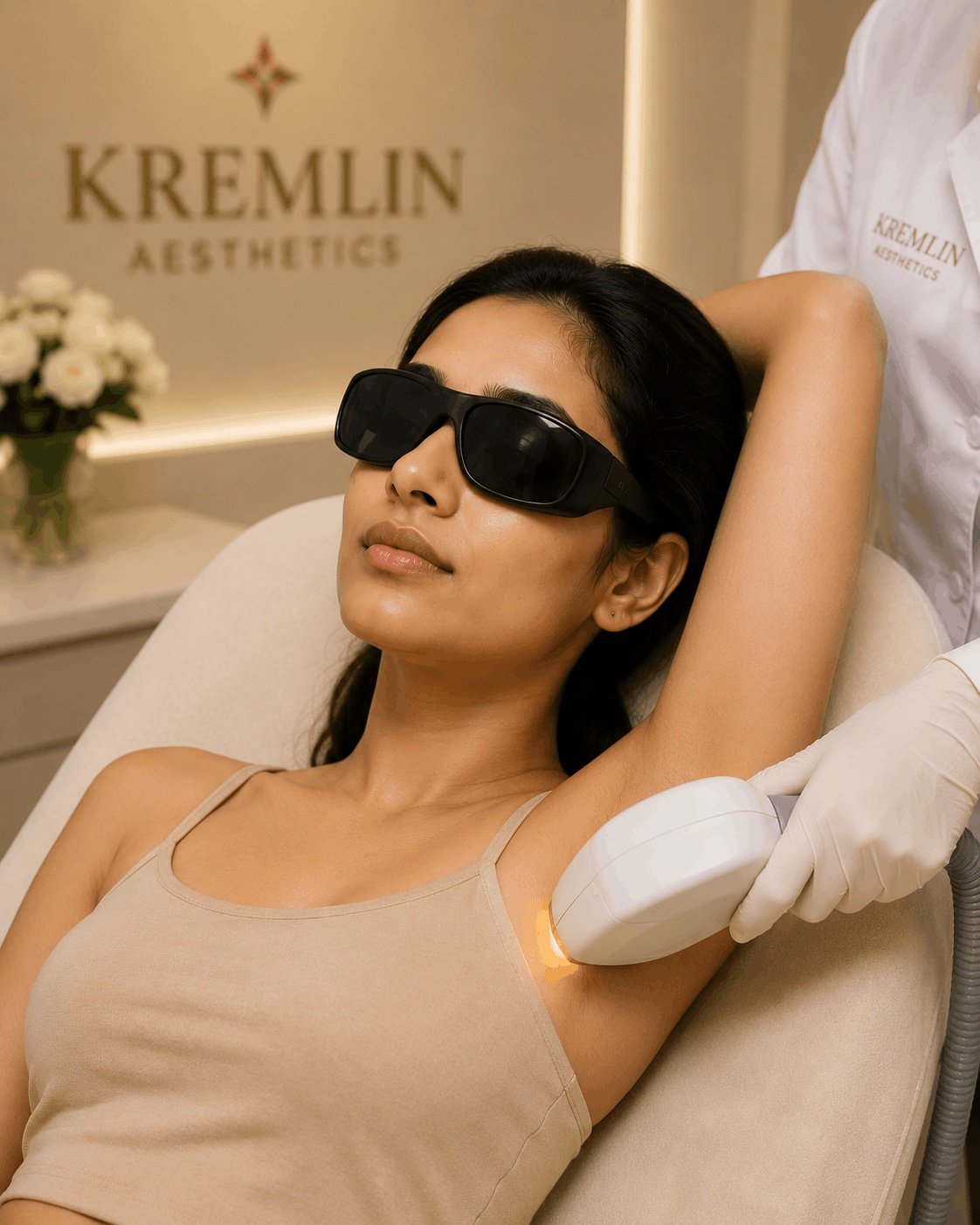
Older lasers weren’t built for melanin-rich skin. Here’s why today’s technology is different — and safe.
A generation of Indian patients was told — correctly, at the time — that laser hair removal was risky for their skin. Early lasers struggled to tell the difference between melanin in hair and melanin in skin, and burns or patchy pigmentation followed. That era is over, but the fear has outlived the technology.
Why older lasers struggled
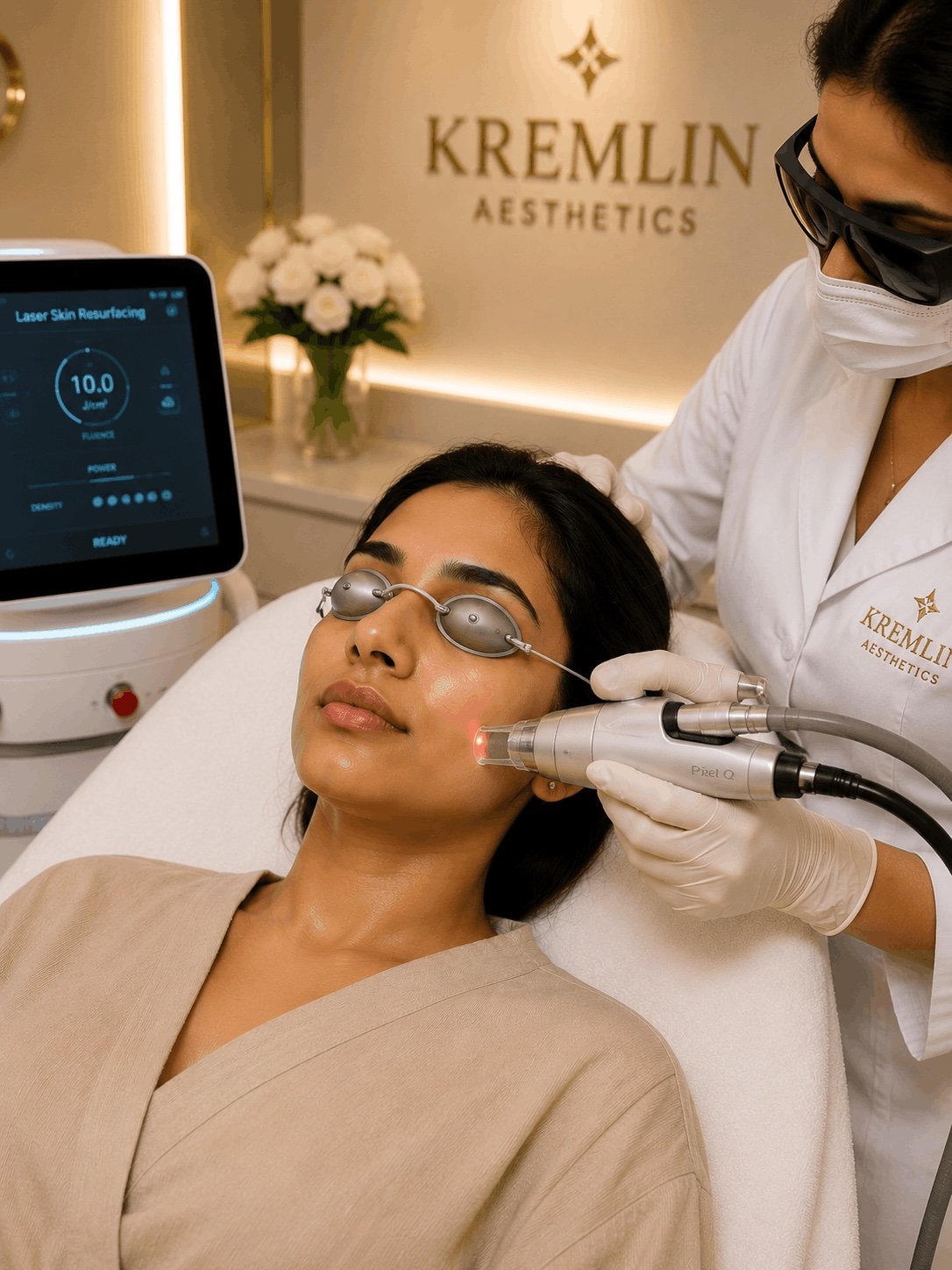
The original alexandrite and IPL systems used wavelengths that melanin-rich skin absorbed aggressively. On Fitzpatrick types IV to VI — most Indian skin — too much laser energy ended up in the skin instead of the follicle. The result: effective for some, unsafe for many.
Modern Nd:YAG lasers changed the physics. Their longer 1064nm wavelength passes through the pigmented surface layers and deposits energy at the follicle, where it belongs. Combined with integrated contact cooling and conservative, personalised settings, treatment is now both safe and genuinely effective on deeper skin tones.
“The question isn’t whether laser works on Indian skin. It’s whether the clinic has the right laser — and the judgement to use it properly.”
What a safe course looks like
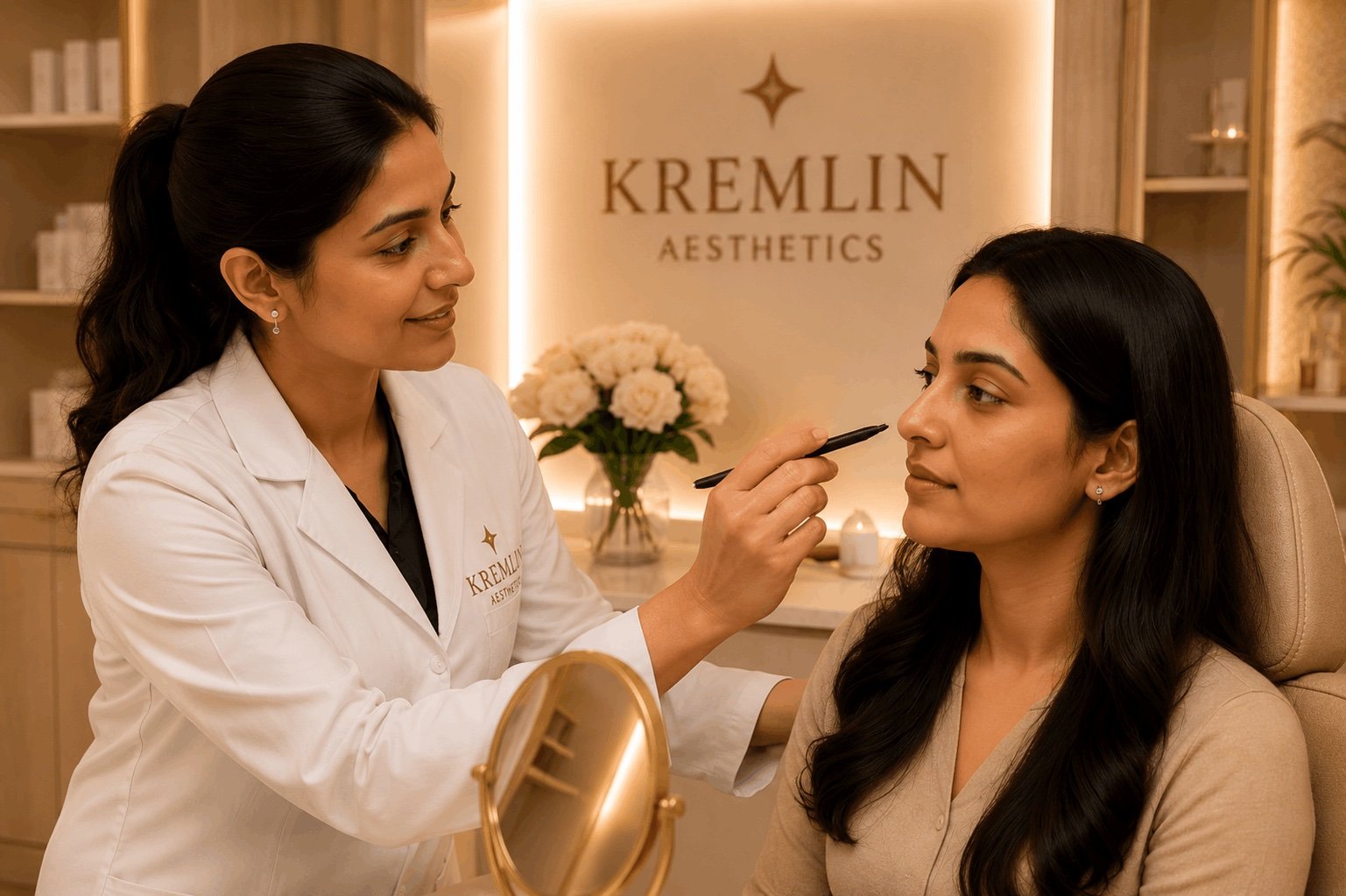
At Rêve, every laser plan starts with a physician assessment and a patch test. Expect six to eight sessions spaced four to six weeks apart, tracking your hair’s growth cycles. Most patients see 80–90% permanent reduction by the end of a course, with each session taking as little as fifteen minutes for small areas.
Red flags to watch for anywhere you go: no patch test, no doctor on site, prices that seem impossibly cheap, and machines nobody can name. Your skin deserves better questions.
Have a question about this?
Book a free consultation and get personal, physician-led advice.
Book a consultation