
The 5 types of acne scars — and what treats each
Acne scars come in five types: ice pick, boxcar and rolling scars, which are depressed, and hypertrophic and keloid scars, which are raised. Flat dark marks left after pimples are not scars at all — they are post-inflammatory pigmentation, which fades and is treated differently. Matching the treatment to the scar type is what decides the result.
First: is it a scar or a mark?
Most of what patients call "acne scars" are actually flat brown or dark marks — post-inflammatory hyperpigmentation. These carry no texture change: run a finger over them and the skin feels smooth. They fade over months and respond to pigment-directed treatment and strict sun protection, not to scar procedures.
A true scar is a change in texture — a dip or a bump you can feel, and one that shows in low-angle light. This distinction is the first thing we establish in an assessment, because scar tools do nothing for pigment and pigment creams do nothing for texture. Getting it wrong wastes both money and months.
Ice pick scars
Narrow, deep pits — as if the skin was punctured by a needle. They are usually smaller than 2mm across but extend deep, which is why they are the hardest type to improve with surface-level treatment alone.
Honest framing: ice pick scars respond least to any single modality. Focal techniques targeting each pit individually tend to do more than treating the whole face uniformly, and expectations should be set at softening, not disappearance.
Boxcar scars
Broader depressions with defined, sharp edges — like a small crater with walls. They can be shallow or deep, most often on the cheeks and temples.
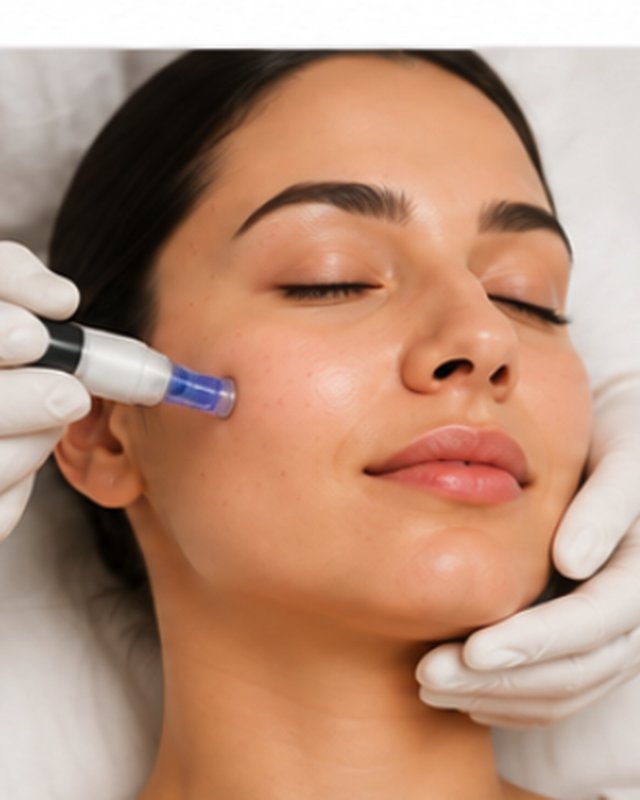
Shallow boxcar scars are among the better responders to collagen-remodelling treatments such as microneedling, because building new collagen in the base visibly lifts the depression. Deeper boxcars improve more gradually over a longer course.
Rolling scars
Wave-like undulations across an area of skin, caused by fibrous bands tethering the skin down from underneath. They have soft, sloping edges, and they look dramatically worse in side-lighting — which is why patients often notice them in car mirrors and lift lighting.
Rolling scars are usually the most satisfying type to treat: releasing the tethering and stimulating collagen lets the surface sit more evenly. Microneedling courses are typically the starting point.
Raised scars: hypertrophic and keloid
Hypertrophic scars are raised but stay within the original spot's boundary; keloids grow beyond it and can keep growing. Both are more common on the jawline, chest, shoulders and back, and more common in Indian skin than in lighter skin types.
A keloid tendency changes the entire plan. Aggressive resurfacing on keloid-prone skin can trigger new scarring worse than the original — so raised scars are managed medically first, and any energy-based treatment is chosen conservatively. If you have ever had a keloid, say so at assessment; it is one of the most important facts in your history.
Matching the treatment to the type
Rolling and shallow boxcar scars: collagen-induction approaches such as microneedling, usually as a course of sessions. Surface texture and the pigment component: chemical peels alongside. Ice pick scars: focal techniques and honest expectations. Raised scars: medical management before anything resurfacing.
Two rules hold regardless of type. Active acne must be controlled first — treating scars while new breakouts continue means new scars form as fast as old ones soften. And realistic outcomes are measured in visible improvement over a course of sessions, not erasure; any clinic promising scar-free skin is describing something no treatment achieves.
Frequently asked
Can acne scars be removed completely?
No treatment erases scars completely. A realistic outcome is visible softening and smoothing over a course of sessions, with the degree depending on scar type, depth and skin. Dark flat marks, by contrast, can clear substantially — because they are pigmentation, not scarring.
Do acne scars fade on their own?
Flat dark marks (post-inflammatory pigmentation) fade over months without treatment. True textural scars — pits, craters, rolling dips — do not resolve on their own; they may soften slightly as skin matures but persist without treatment.
What works for deep pitted scars?
Ice pick scars respond least to surface-level treatment. Focal, scar-by-scar techniques tend to achieve more than uniform resurfacing, and combining approaches over time beats any single procedure. An examination decides the sequence.
Should I treat scars while I still get pimples?
Control the acne first. Treating scars during active breakouts means new scars form while old ones are being softened, and inflamed skin responds less predictably to procedures. The good news: treating acne early is also the single most effective way to prevent further scarring.